

If you’ve heard of the MFL Occupational Health Centre, you may have wondered about the “MFL” in our name. Does it mean we’re part of the Manitoba Federation of Labour? Are our services only for union members? Do unions fund our operations?
These are fair questions, and we’re glad to answer them. The short version: OHC is an independent, separately incorporated charitable organization. We are not a department or program of the MFL. We receive no operational funding from the MFL. And our services are available to all workers in Manitoba, regardless of union membership.
But there’s a longer story here, and it’s one we’re proud of. Understanding where we come from helps explain who we are and why our doors are open to every worker who needs us.
Why Workers Built Their Own Clinic
In the late 1970s, Manitoba workers faced a crisis. Industrial lead poisoning was making headlines, and workers at foundries and other lead-using industries were falling ill. The existing medical system wasn’t equipped to help them. Company doctors were seen as conflicted, as were Workers Compensation Board physicians. And there were simply no physicians with occupational medicine expertise who were in a position to advocate for workers or support WCB appeals. Workers who suspected their jobs were making them sick had nowhere to turn for impartial, expert care.
The Manitoba Federation of Labour’s Health and Safety Committee, led by activists like Luis Rufo and Jay Cowan, began organizing. They sought out independent physicians, educated workers about their rights, and documented what was happening in Manitoba’s workplaces. The experience made one thing clear: workers needed their own health resource, one that would put their interests first, provide specialized occupational health expertise, and remain independent from employer influence.
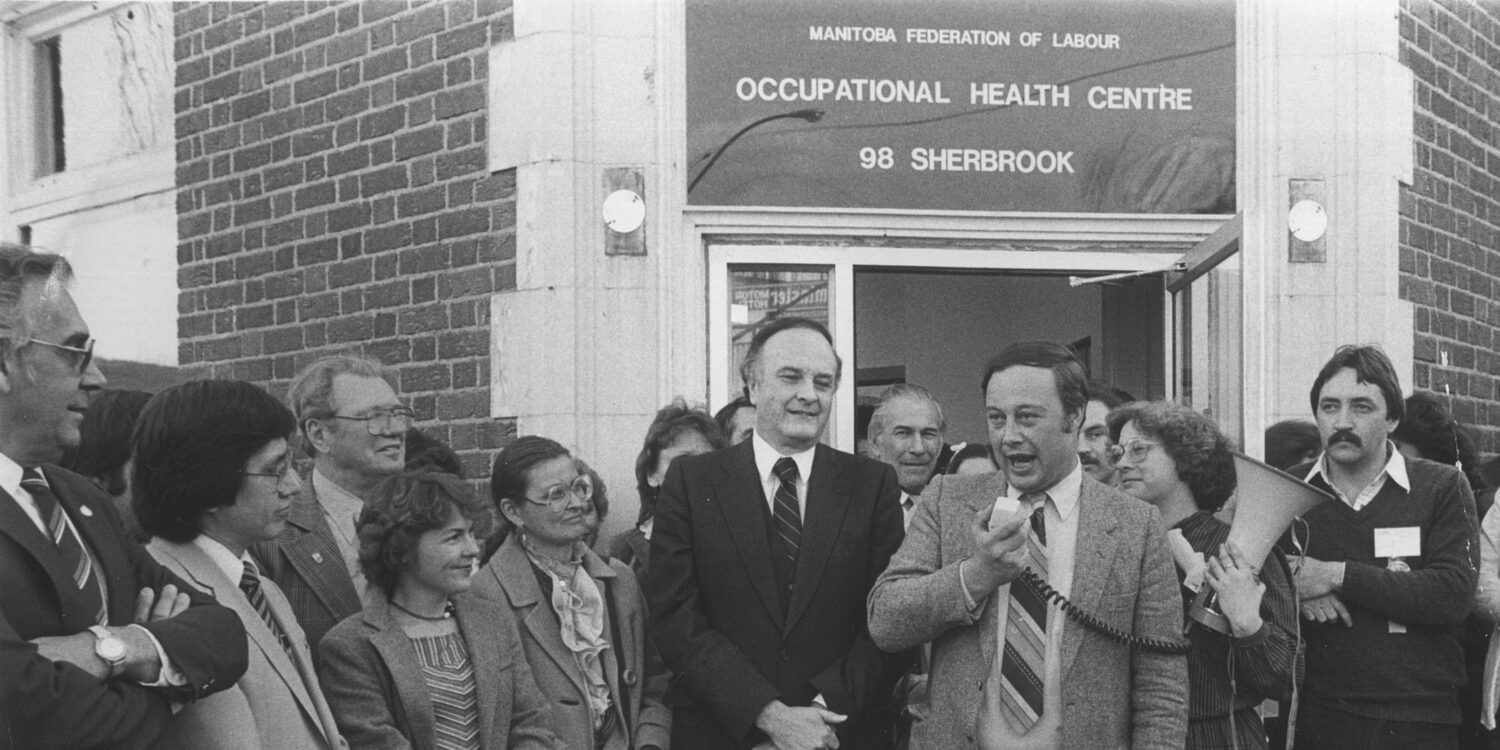
In 1981, over 600 delegates at the MFL Convention voted unanimously to establish an occupational health clinic. Within hours, they had donated over $30,000 to make it happen. Union members across the province, affiliated and non-affiliated alike, eventually raised $230,000 to launch the Centre. Volunteer tradespeople renovated the building. On April 8, 1983, OHC opened its doors at 98 Sherbrook Street, becoming only the second worker-founded occupational health clinic in Canada.
Our Own Organization, Our Own Mission
From the beginning, OHC was established as its own legal entity. We were incorporated in June 1982 as MFL Occupational Health and Safety Centre, Inc., a registered charity with our own constitution, board of directors, and mandate. The MFL was instrumental in our founding, but they intentionally created an organization that would stand on its own.
This independence was deliberate. An occupational health centre needs to be trusted by workers, employers, health professionals, and government alike. That trust depends on organizational independence and stable, impartial funding. Shortly after opening, OHC successfully lobbied for provincial block funding through what is now the Winnipeg Regional Health Authority. Today, approximately 75% of our operational budget comes from WRHA, and we have received additional project-based funding from the Workers Compensation Board, as well as federal sources, including Immigration, Refugees and Citizenship Canada and Justice Canada. We also receive grants and donations from individuals, unions, and community organizations.
The MFL Connection Today
So why do we keep “MFL” in our name? Because we’re proud of where we come from, and because the connection remains meaningful even as our organizations operate independently.
Under our constitution, the MFL Executive Council appoints fourteen union members to our Board of Directors following each triennial MFL convention. This governance structure ensures that OHC will always be led by workers, people who understand workplace realities firsthand. Our board also includes a staff worker representative, members from community partner organizations, and members-at-large from labour and community. This model keeps us accountable to the workers we serve while maintaining our independence as an organization.
The MFL and OHC also support each other’s work in informal but important ways. We provide research and consultation support for MFL health and safety initiatives. The MFL advocates for OHC to be better utilized by government and workplaces across the province. We share a commitment to the principle that guides both our organizations: an injury to one is an injury to all.
Open to All Workers
While our founding was led by organized labour, the labour movement’s mission has always extended beyond its own membership. Our founding documents established that we exist to serve “all workers in Manitoba who believe themselves to be suffering from an occupationally induced illness.” Our current strategic plan puts it simply: we are committed to “providing accessible services and programs for all workers in Manitoba.”
This means union members and non-union workers alike. It means newcomers to Canada navigating unfamiliar workplaces. It means workers in precarious employment who may have little workplace protection. It means anyone whose health has been affected by their work.
Our services, including medical consultations, workplace assessments, education and training, and resource library access, are available free of charge. We also work alongside employers and joint health and safety committees, because lasting change happens when workers and employers share understanding, tools, and resources. We recognize that workers are diverse and face different barriers depending on their language, culture, immigration status, economic situation, and more. Meeting workers where they are, regardless of background, is central to who we are.
Looking Forward
More than forty years after our founding, OHC continues the work that began with those union activists who refused to accept that workplace illness was inevitable. The landscape has changed: We’ve moved locations, expanded our programs, and adapted to serve increasingly diverse communities of workers. But our core identity remains the same: a worker-centred community health organization, born from the labour movement, serving all workers in Manitoba.
We’re proud of our labour roots. They ground us in a tradition of solidarity, collective action, and the belief that every worker deserves to come home healthy at the end of the day. And we’re equally proud that our doors are open to everyone. If you’re a worker in Manitoba and you have concerns about your health and safety at work, OHC is here for you.
Continue the Legacy
OHC exists because workers chose to take care of each other. In 1981, union members pooled their resources to build something that would serve not just themselves, but every worker who came after them. That spirit of solidarity is what makes this work possible.
If you believe that every worker deserves access to impartial occupational health services, we invite you to be part of this story. Donations to OHC help us reach more workers, develop new programs, and continue providing free services across Manitoba. Support OHC and be part of a story that’s been unfolding for over forty years.